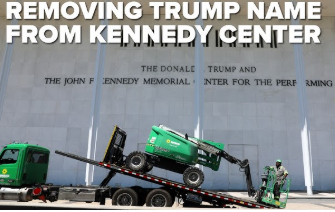
At 3 a.m. on June 13, 2026, a construction crew started pulling letters off the facade of the Kennedy Center in Washington, D.C. Crowds formed on the street to watch. A tarp went up over the scaffolding before dawn. By 11 a.m., Kennedy Center Executive Director Matt Floca filed a certification with the court stating that Trump’s name had been “removed from all physical signage on the Kennedy Center building and grounds.” One hour before the noon deadline.
The administration tried everything available to stop it. None of it worked.
How the Legal Fight Actually Played Out
U.S. District Judge Christopher Cooper issued his ruling on May 29, 2026, finding that the Kennedy Center’s board of trustees had acted illegally when it voted in December 2025 to add Trump’s name to the venue. The ruling was direct: “The Kennedy Center’s organic statute makes crystal clear that the Center is to be named for President Kennedy, and it cannot bear any other formal name or public memorial based on the Board’s unilateral say-so. Congress gave the Kennedy Center its name, and only Congress can change it.”
Cooper set a midnight Friday deadline for the name’s removal. The Trump administration complied initially — beginning the process of restoring the center’s digital and physical footprint — then reversed course the night before the deadline. The DOJ filed a notice of appeal and simultaneously asked Cooper to stay his own order while the appeal played out. Cooper refused. The DOJ immediately took the stay request to the U.S. Court of Appeals for the D.C. Circuit. A three-judge panel rejected it in a brief, unsigned ruling Friday evening without explaining its reasoning.
The administration then cited thunderstorms sweeping through the Washington area as the reason the midnight deadline could not be met, requesting a 12-hour extension to noon on Saturday. Judge Cooper granted it. Workers had already begun removing the letters by 3 a.m., thunderstorms apparently notwithstanding.
Who Filed the Lawsuit and Why She Called It “Good Trouble”
Ohio Congresswoman Joyce Beatty is an ex-officio member of the Kennedy Center board — a position held by members of Congress under the center’s organic legislation. In December 2025, when the board voted to add Trump’s name, Beatty says she was repeatedly muted and prevented from voicing her opposition during the vote.
She filed suit in March 2026, arguing Congress was unambiguous in its intent that the Kennedy Center bear Kennedy’s name exclusively. The Trump administration’s own legal brief described her as “a troublemaking appointment from the beginning of her tenure” — language Beatty says Trump wrote himself. Her response, delivered on air this morning, was to quote John Lewis: “Get in good trouble.”
The appeals court panel that rejected the DOJ’s final stay request was composed of two judges appointed by President Obama and one appointed by Trump. The ruling was unanimous.
What the Administration Argued — and What the Court Said About It
The DOJ’s filings made three arguments for keeping the name on the building while the appeal proceeded. First, that removing Trump’s name would stall fundraising. Second, that it would prevent repairs from taking place. Third, that it would “confuse the public.” The filing also stated that “no one else other than President Trump would be in the position of both rebuilding the building and raising the money for its operation,” and warned of potential “financial and structural collapse.”
Judge Cooper rejected each argument, writing that the administration had not “carried their burden to establish that a stay of the Court’s permanent injunction concerning the Kennedy Center’s renaming is warranted pending an appeal.” Beatty’s lawyers, in a filing responding to the last-minute stay request, called it “frivolous.”
The appeals court agreed, silently.
The Financial Questions Nobody Has Answered
The name fight is the story above the fold. The financial story underneath it is less resolved.
Kennedy Center whistleblower Josef Palermo gave an interview earlier this year describing what he characterized as financial mismanagement under Rick Grinnell, the hand-appointed director installed by the Trump administration. Beatty confirmed in her interview this morning that board meetings have featured declarations of financial stability followed by gavels coming down before dissenting members could respond — a pattern she described as “interesting.”
Senator Sheldon Whitehouse has indicated he wants an inquiry into the center’s finances. The judge’s order also included a requirement for the administration to produce a declaration of a plan of action for restoring programming — a provision Beatty says will “force the hand of this board to have clear financials.” Artists have separately filed suit against the Kennedy Center over unpaid financial obligations.
The center is simultaneously warning it may lose hundreds of millions in donations as a result of the name removal, scheduling events including the Mark Twain Prize and a Fourth of July celebration, and facing active litigation over its finances. Those three facts do not fit comfortably together, and no one has yet explained how they do.
What Happens to the Name Now
The tarp is still up. The appeals court left open the possibility that Trump’s name could be restored if the DOJ succeeds in its underlying appeal — which remains active. The certification filed today covers physical signage, email signatures, letterhead, brochures, and promotional materials. It does not resolve the appeal.
The building on the Potomac currently says “The John F. Kennedy Center for the Performing Arts” on its white marble portico — or will, once the tarp comes down. Whether it stays that way depends on the D.C. Circuit’s ruling on the merits of the DOJ’s appeal, which has no set timeline.
Crowds were still on the street at noon watching the tarp.
Sources
- U.S. District Court for the District of Columbia: Beatty v. Kennedy Center Board of Trustees - Injunction Order
- U.S. Court of Appeals for the D.C. Circuit: Emergency Stay Denial & Order of Appeals
- Congressional Record / Ex-Officio Board Statements: Statements on Kennedy Center Act & Organic Statute naming rights
About the Author
Your 44-year-old aunt who drove to D.C. at 2 a.m. in a rented minivan wearing a JFK poncho from Etsy, got cited for jaywalking while screaming “CONGRESS GAVE THEM THAT NAME,” and is now filing a restraining order against the DOJ from a Denny’s parking lot.